
Providence in the Smallest Events
Book of EstherThis flow follows Carson’s argument that seemingly incidental choices and delays are coordinated into the Jews’ deliverance without a miracle.
increasing Bearing strength in each event
 decreasing
Bearing strength in each eventdecreasingA Strange Command

An Impulse Becomes an Instrument
The King’s Request
Ahasuerus, drinking at his feast, commands Vashti to appear before his guests. Carson stresses that the request is exceptional and indecorous, rather than an inevitable custom of the court.
A Particular Moment
The question is not merely why the king acts badly, but why this thought and this occasion coincide. In Carson’s reading, the free decision remains the king’s while serving a purpose he does not understand.
The Queen’s Refusal

Refusal Changes the Succession
A Risky Choice
Vashti refuses the king’s demand despite the danger of disobeying an absolute ruler. The essay presents her decision as arising from her own pride or sense of decorum, not from an intention to help the Jews.
A Consequential Removal
Her refusal prompts the counselors’ advice and the king’s decree. What begins as a personal act generates the vacancy Esther will occupy.
A Conspiracy Recorded

Mordecai’s Service Is Preserved
The Plot
Two royal chamberlains conspire against Ahasuerus, and Mordecai discovers the scheme. The account supplies little explanation of how he learns of it, leaving the means obscure.
A Delayed Record
The king’s life is protected, but Mordecai receives no immediate reward. The overlooked service remains in the royal chronicles until its later discovery can interrupt Haman’s plan.
A Lot Sets the Date
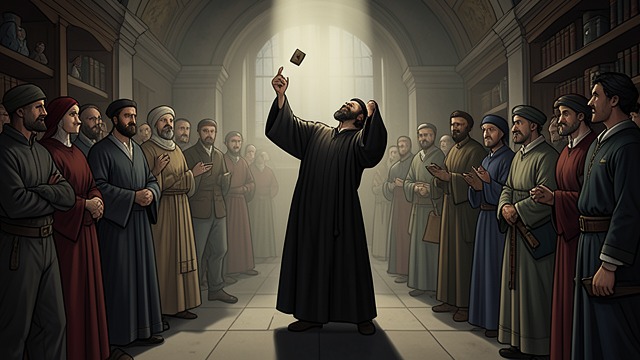
The Threat Is Delayed
Haman Consults the Lot
Haman casts lots to determine when to carry out the Jews’ destruction. The date falls in the twelfth month, leaving a long interval between the decree and its intended execution.
Superstition Reversed
Carson reads the delay as an unexpected protection: the practice meant to choose an auspicious day gives time for events that will defeat Haman. The lot’s human and superstitious use becomes part of providential timing.
A Night Without Sleep

Insomnia Opens the Record
A Restless King
Ahasuerus cannot sleep and orders the royal chronicles read aloud. The reader reaches the account of Mordecai’s service, and the king discovers that no honor was ever granted.
A Narrow Escape
Haman is already near the court to ask for Mordecai’s execution. The timing turns an unremarkable night and a routine reading into the hinge of the immediate crisis.
During the feast that precedes Esther’s rise
Immediately after Ahasuerus’s summons
Before Haman’s rise to power
In Nisan, before the decree’s execution in Adar
The night before Haman plans to ask for Mordecai’s death
